 العربية
العربية
العربية

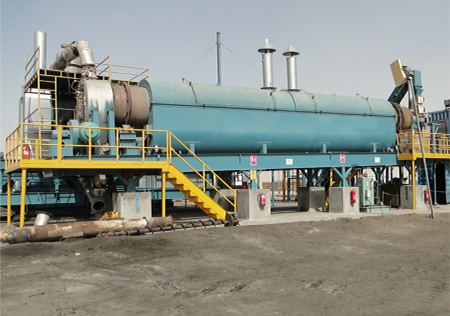
Thermal desorption is an environmental remediation technology that utilizes heat to increase the volatility of contaminants such that they can be removed from the solid matrix without thermally destroying it. It is a separation technology that volatilized contaminants and then either collecting or thermally destroying, them, therefore any thermal desorption system usually has two major components; the desorber itself and the off-gas treatment system. In general, thermal desorption is capable of treating various materials, including soil, sediment, sludge, and filter cake, contaminated with a wide range of organic contaminants. Petroleum, volatile organic compounds (VOCs), semi-volatile organic compounds (SVOCs), pesticides, and other compounds with boiling points up to about 315 °C are typically processed through direct - or indirect-contact thermal desorption units. Contaminants with boiling points above 315 °C